Every pro angler uses wind and water clarity as their two primary triggers for bait selection. Brandon breaks down his complete early spring framework — 50°F to 65°F — and exactly how to use both conditions to narrow your bait choice fast.
Every pro angler uses wind and water clarity as their two primary triggers for bait selection. Here's Brandon's complete early spring framework — and how to use it on the water.
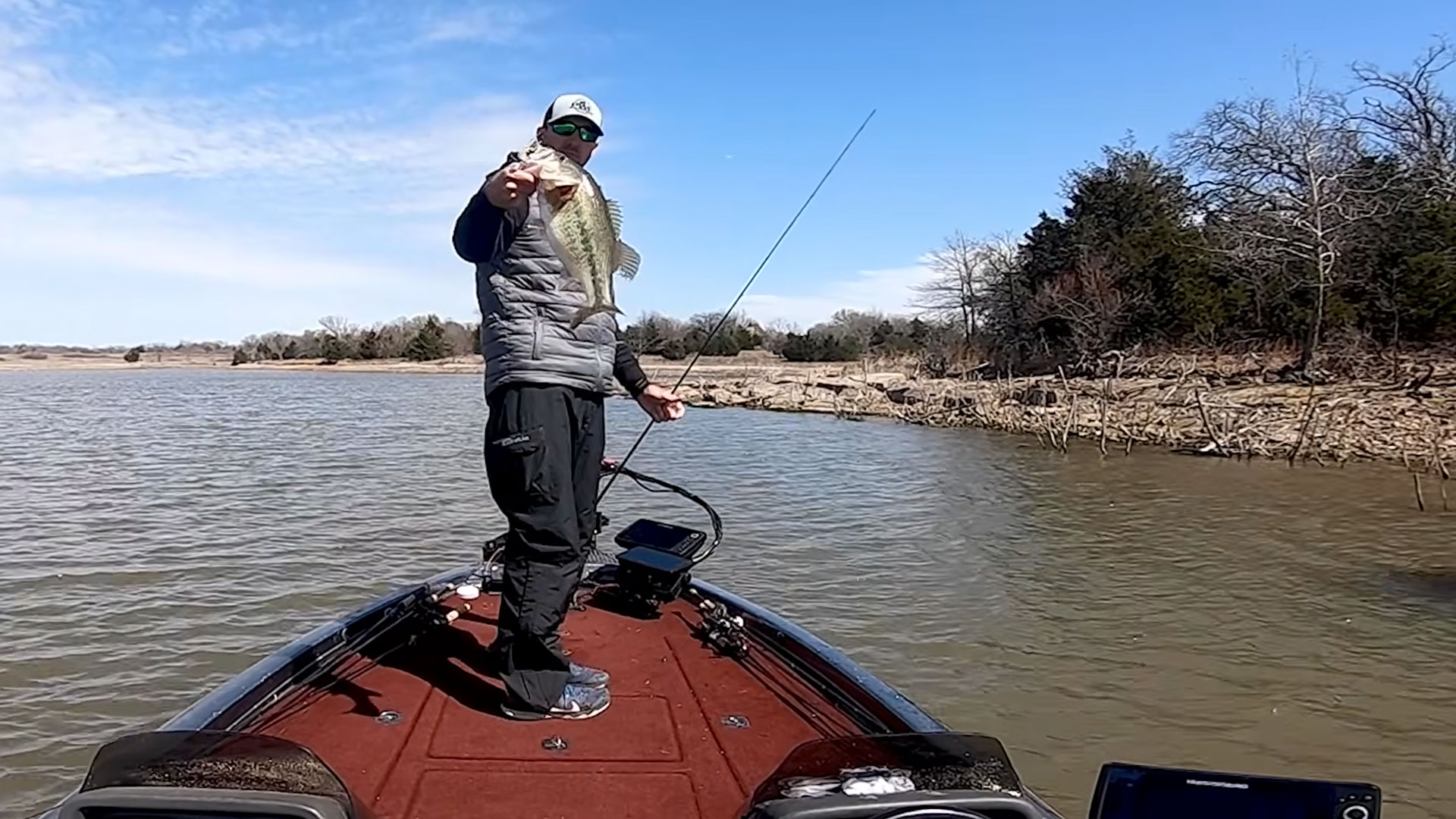
Why Early Spring Bass Are Aggressive
Brandon defines early spring as the window from about 50°F to 65°F — before bass actually get on the beds. During this time, their entire focus is gaining weight and feeding up as much as possible. The reason? Once late spring hits and spawning begins, they essentially stop eating entirely. They'll be relying on the reserves they built in early spring to get through that whole spawning period.
The bottom line: they're pretty aggressive this time of year. Cold fronts and winds still roll through, but overall the fish are in feed mode. Understanding that sets the stage for everything else.
What Wind Actually Does for You
Wind does two things simultaneously: it disguises your baits, and it pushes forage around the lake. Brandon describes it as shrinking the lake for you. When wind is blowing on a bank, shad, crawfish, and other forage get pushed up into the shallows against rocks, shelves, and grass. That compressed water column becomes a tight ambush zone — and the bass know it.
There's also a secondary reason bass want to be shallow in early spring beyond feeding: sunbathing. They need sun penetration on their bodies to develop their eggs before the spawn. So even on calm days, they're gravitating shallow anyway. Wind just adds another reason to commit to that shallow bank by stacking bait right in front of them.
How Water Clarity Changes the Game
Think of water clarity and wind as doing the same job from different angles. Wind breaks up light penetration at the surface, making it harder for bass to clearly see your bait. Water clarity does the same thing from within the water itself: stained water adds a natural filter that obscures the bait and shifts how the fish hunt.
In clear water, bass are hunting primarily by sight. They can see well, so your bait needs to look lifelike and natural. As the water gets stained, they start relying more on their lateral line — the sensory system that detects movement and vibration. That's your cue to reach for baits that move water and create feel-able vibration.
Muddy or dirty water is its own scenario. Newly dirty water is disorienting for bass — just like when you shut the lights off in your house and start feeling along the wall to navigate. They get tight to structure because they need something to orient to. But if it's been dirty a while, just like our eyes adjusting in the dark, they start venturing out and chasing again.
The Conditions Matrix: What to Throw and When
Brandon's approach isn't about picking a single magic bait for a condition — it's about using wind and clarity together to narrow your category of baits quickly.
Calm + Clear: Baits need to be natural, realistic, and lifelike. Think natural colors and slower presentations that mimic real forage. That said, you can also go fast in clear water — a willowleaf spinnerbait burned quickly creates flash and triggers a reaction before the fish can analyze it. The clearer the water, the faster Brandon wants to move a moving bait.
Windy + Clear: Adding wind to clear water opens up your bait window considerably. The wind is doing some of the filtering work, so you can get away with more moving baits. In heavy wind, even clear water fish can't always find a quiet finesse presentation — vibration and noise matter here.
Calm + Stained: The stain is doing the filtering even without wind, so moving baits are an option. But this condition requires you to really feel out the lake. If the water is on the dirtier end of stained, fish are going to be on structure — go slow and put your bait right on them. If it's lighter stain, they may be moving enough to cover water.
Windy + Stained — The Oklahoma Sweet Spot: This is Brandon's favorite spring condition in Oklahoma. Wind pushing bait onto a stained bank is as good as it gets. Spinnerbaits, chatterbaits, crankbaits banging off structure, shallow presentations — everything works. The fish are shallow to feed and sunbathe, the stain gives you cover, and the wind has stacked bait right in front of them.
Windy or Calm + Dirty: Whether it's windy or calm, dirty water is dirty water — the distinction becomes speed. Windy and dirty: throw something moving and loud with lots of vibration past structure. Calm and dirty: slow way down, get your bait as close to structure as possible, and tick or drag it right along that cover. Same areas, different speed.
How to Use This on the Water
Before you even make your first cast, look at two things: Is there wind, and which banks is it hitting? What does the water look like — clear, stained, or dirty? From those two observations, you can immediately narrow your bait category and start fishing the right banks with the right approach instead of trial-and-erroring your way through the morning.
Part 2 of this series covers late spring — when the fish move to the beds and everything changes. Stay tuned.