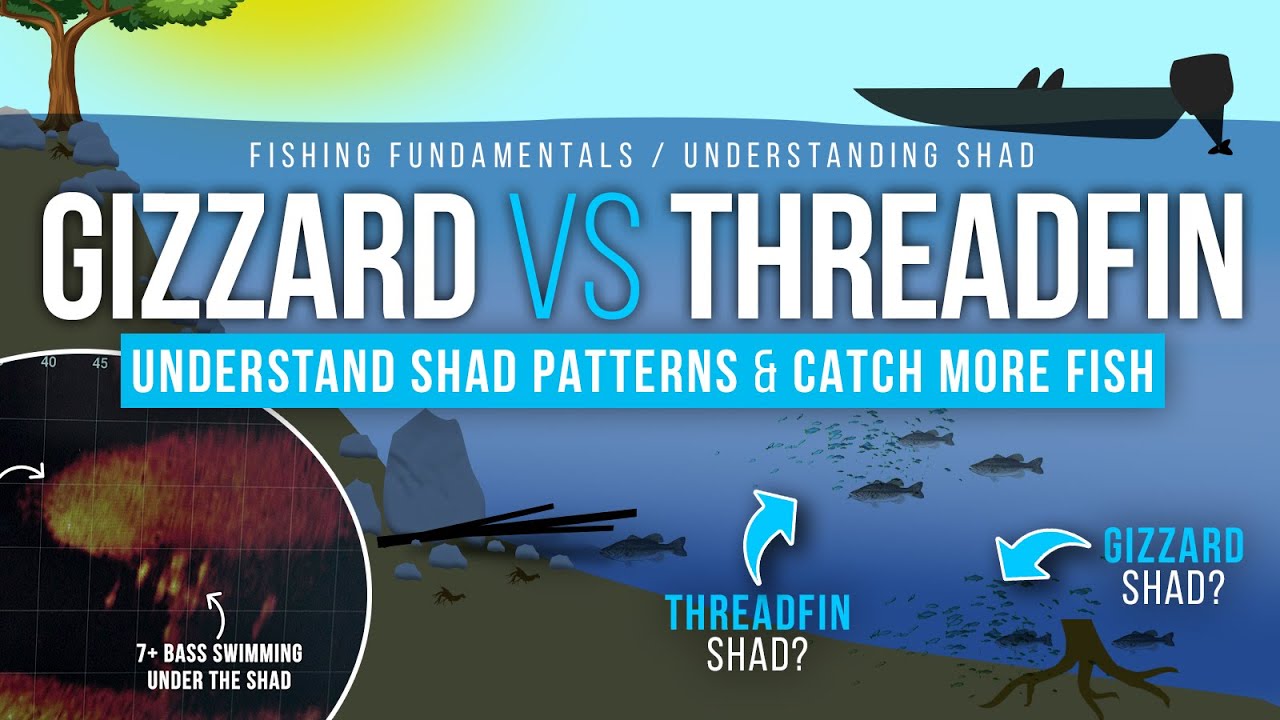
Shad make up roughly 75% of a bass's diet — but not all shad are the same. Brandon breaks down the key differences between threadfin and gizzard shad, how to identify them on the water, and exactly how both species move through the seasons so you can put your bait in the right place all year.
Shad make up roughly 75% of a bass's diet depending on the body of water — which is exactly why understanding them matters. Not just knowing they exist, but knowing the difference between the two main species, where they live in the water column at different times of year, and how that movement directly tells you where the bass are. Brandon breaks it all down.
Threadfin vs. Gizzard Shad: How to Tell Them Apart
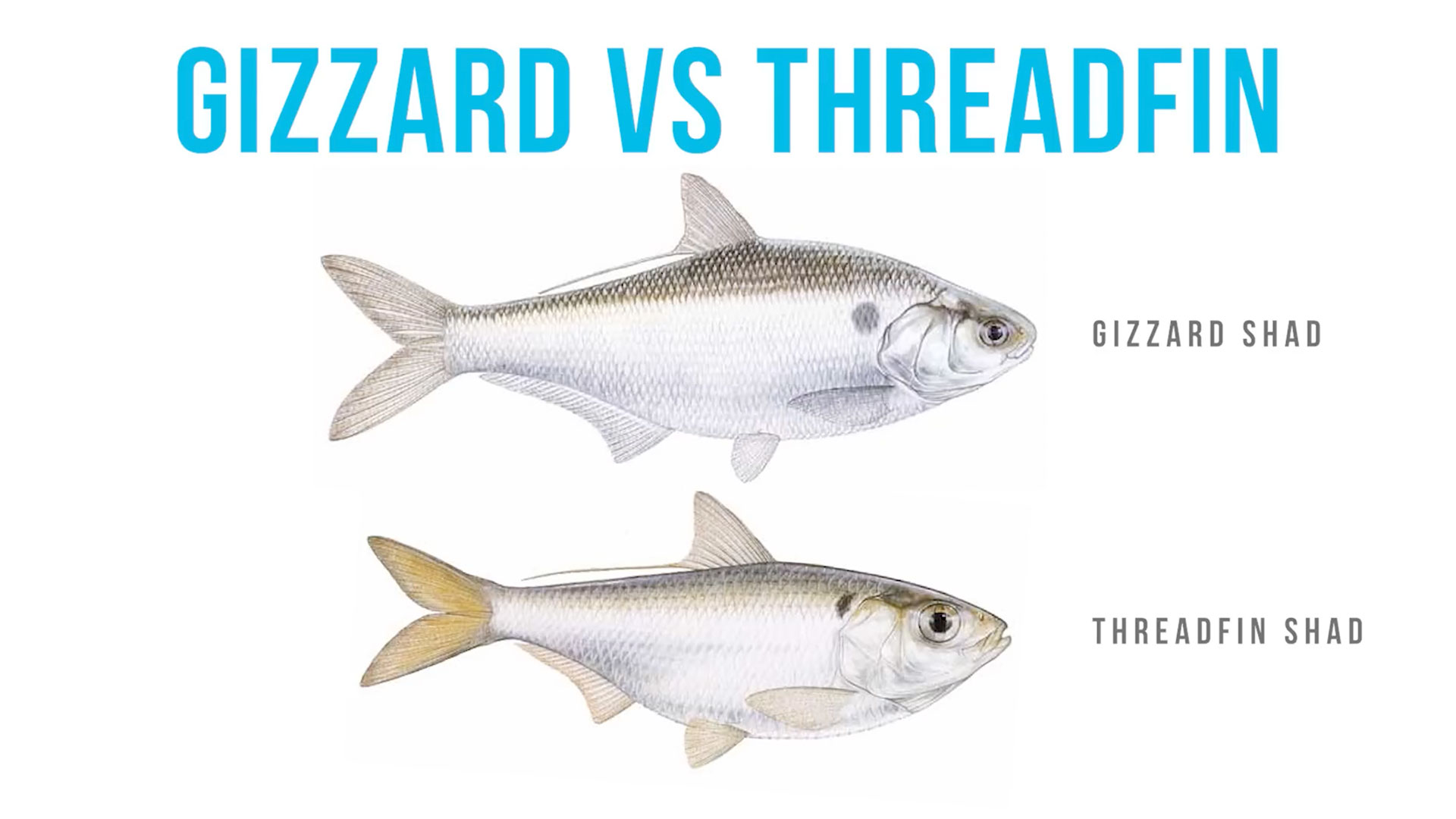
The quickest way to tell them apart on the water is the jaw. On a gizzard shad, the nose extends past the lower jaw — that's a classic bottom-feeder trait, and gizzard shad are exactly that. They filter bacteria and organic material off the lake bottom through a gizzard lined with rocks and sand. On a threadfin shad, the lower jaw extends past the upper nose — they feed higher in the water column on plankton suspended throughout the water.
Both species have that distinctive long dorsal ray extension (which is where the threadfin gets its name — the long, threadlike fin off the back of the dorsal), so that's not a reliable way to separate them. The tail color is another tell: gizzard shad have silver tails, threadfin have golden tails. Both have a spot behind the gill plate, though it tends to be a little more pronounced on the threadfin.
Color-wise, gizzard shad are more muted — blue-gray back, silverish sides. Threadfin are more reflective and can show blue, black, purple, or green depending on the light and water. That variety is a big reason there are so many shad-colored crankbait options on the market.
Size Differences — and Why They Matter
Gizzard shad can grow up to 16 inches and over 4 pounds. That's bigger than a lot of the bass in a given lake, which means once they get large, they stop being prey and start being competition. If you're thinking about stocking gizzard shad in a pond, make sure your largemouth population is already well established and large enough to eat them — otherwise the shad can take over fast.
Threadfin shad max out around 6–7 inches, and most run smaller than that. They stay in the edible size range their entire lives, which makes them a consistent food source for bass. They're generally the better stocking choice for smaller private waters.
Where They Live — and the Cold Water Line
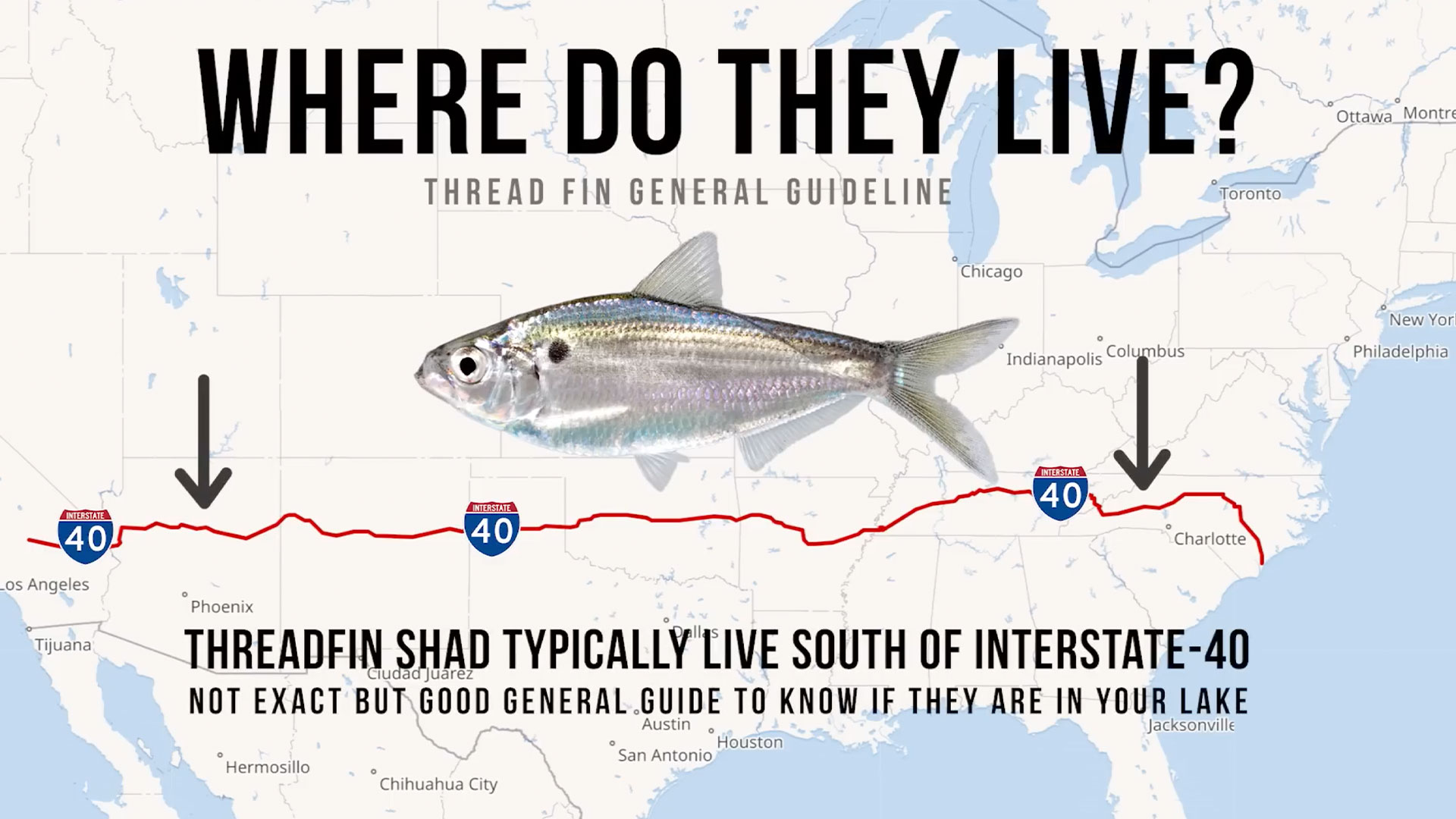
Gizzard shad are cold-tolerant and can survive just about anywhere. Threadfin shad die off when water temperatures drop below roughly 42–45°F. As a general rule, threadfin thrive in waters south of I-40, though there are exceptions — Grand Lake in Oklahoma is one of the furthest-north lakes with a healthy threadfin population.
This survival difference has real implications. In a hard winter, threadfin populations can crash. Gizzard shad will push through it — they can survive under ice. What kills gizzard shad is stress from prolonged cold depleting their food source, not the cold itself.
The Spawn: Timing and Numbers
Both species spawn at similar water temperatures — roughly May through June in Oklahoma, right as largemouth bass are finishing up on the beds. Threadfin actually get two spawns: one in early summer and a second spawn from those babies later in the summer. Gizzard shad only spawn once, but they compensate with volume — 250,000-plus eggs per fish. Threadfin produce just 2,000 to 20,000 eggs per spawn.
During the spawn, shad move shallow overnight or before sunrise, pushing against banks, rocks, and wood to do their thing. Bass hear the commotion, follow them up, and feed aggressively. Early morning during the shad spawn is one of the best times of year to throw shad-mimicking moving baits — crankbaits, spinnerbaits, bladed jigs — right on the bank.
Seasonal Movement: Where Are They (and the Bass) All Year?
After the spawn in early summer, threadfin slide out and suspend higher in the water column. Gizzard shad drop down and work the bottom. As summer heats up, threadfin actually sink deeper to stay in cooler water — and bass follow them out deep. That's one of the main reasons bass go deep after the spawn: they're chasing suspended shad, not just reacting to heat.
By late summer, the thermocline sets in and cuts off oxygen below a certain depth. Shad stack just above the thermocline — that's where the cool, oxygenated water is. If you're grinding bottom in 20–22 feet and not getting bit, check your graph for where the thermocline is. Your bait might be 5 feet below the last fish in the lake.
Fall is when shad movement becomes the most predictable and the most fishable. As days get shorter starting in September, shad start migrating toward the banks. Bass follow them up, stacking on shallow banks to feed before winter. Top waters, crankbaits, and spinnerbaits in shad colors are the go-to through October and into November as that migration intensifies and the shad push into the very shallows chasing the last warm water of the year.
Come December, it reverses. Shad slide back out deep, dropping lower in the water column as temperatures fall. Bass stay tight to them — during fall through winter, bass and shad are almost always together. Jighead minnows, jerkbaits, and swimbaits in smaller sizes match the mood when fish are cold and slow.
In early spring — March and April in Oklahoma — the upper water column starts warming with consistent sunny days. Shad begin rising from their deep winter spots, and bass rise with them. As they push shallower through April and into the pre-spawn, they're accessible again and feeding hard. Spinnerbaits, crankbaits, and bladed jigs along transitional banks are the right call as that shallow migration picks up.
One More Thing: Match the Size
Whatever season you're fishing, match your bait size to the shad in your lake. Bass key in on the size of bait they're actively eating that day — if the shad are running 2 inches and you're throwing a 4-inch swimbait, you're going to get ignored. Pay attention to what's coming out when you net a shad or see them busting on the surface, and scale your presentation accordingly. It's one of the easiest adjustments most anglers overlook.