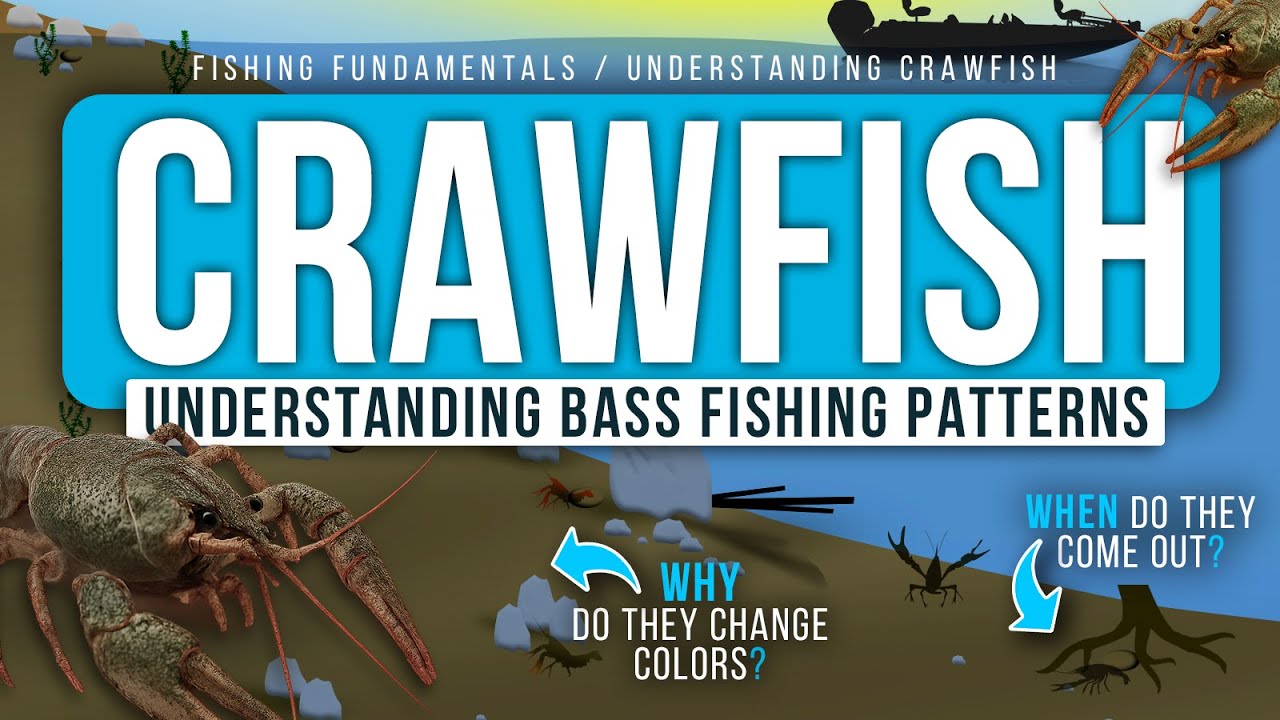
Crawfish color isn't random — it's driven by your lake's diet, water clarity, and vegetation. Brandon explains the full crawfish life cycle and exactly how to match your lure color to what's actually in your lake.
If you want to catch more bass, one of the most overlooked edges is matching your lure color to the crawfish in your specific lake. Not just any crawfish color — the right color for your lake, your season, and your water conditions. Brandon breaks it all down.
The Crawfish Life Cycle: What You Need to Know
Crawfish spend the cold winter months tucked away in burrows and holes under rocks. Around 55°F water temperature in spring, they emerge and their spawning cycle begins. Baby crawfish hatch attached to the mother and eventually release once they're large enough to fend for themselves.
One important thing to understand: crawfish molt every 3 to 4 weeks. As their shell hardens over time, they break out of it and grow a new one — that's how they get bigger. If you pick up a crawfish and the shell feels soft, it's freshly molted. Hard shell means it's near the end of that cycle and getting ready to shed again. Importantly, molting does not change color. Whatever color a crawfish develops, it keeps.
Why Crawfish Are Different Colors in Different Lakes
The single biggest factor in crawfish color is diet — specifically what the crawfish are eating, and what that does to their body chemistry. Crawfish take on the color of their environment. The proteins and nutrients they filter from the food and water around them directly determine their color. This means crawfish in a clear, vegetated lake will look completely different from crawfish in a murky, stained lake — and your lure color should reflect that.
The key nutrient driving this is Vitamin A, which comes from aquatic plants and vegetation. The more plant life in a lake, the higher the Vitamin A content, shifting crawfish color toward greens and browns. Low-vegetation, dirty lakes are Vitamin A-deficient — and that pushes crawfish toward blues and blacks.
Early Spring: Brown and Orange
When crawfish first come out of their burrows in early spring, water temps are around 55°F and there's no real vegetation growth yet. They're filtering clay, dirt, and bottom sediment through their bodies, giving them that classic brown and orange coloration. This is exactly why orange is such a dominant spring color in bass fishing.
Young crawfish — under a year old — tend to show more of a brown and green tint. So you'll sometimes find fish eating both orange and green-pumpkin colored baits in spring. The adults, which make up most of the population, will lean brown and orange.
Dirty and Stained Lakes: Blues, Blacks, and Dark Greens
A lake with stained or dirty water typically lacks vegetation because sunlight can't penetrate deep enough to grow aquatic weeds. That means the crawfish are Vitamin A-deficient. The result: crawfish with blue and black tones, dark greens, and shades of green pumpkin. You'll often see that blue undertone in the pinchers or across the back. The base color is still brown, but those blues and dark greens are in there — and your lure should reflect that.
Clear Lakes: Greens, Browns, and Natural Tones
Clear lakes — whether they have full aquatic vegetation like hydrilla and milfoil, or just shallow plant growth along the banks — are higher in Vitamin A. Crawfish in these lakes shift toward greens, browns, and natural tones. Some even develop a little red or orange on their pinchers. Less blue, more natural. Watermelon, green pumpkin, and natural brown patterns are the ticket here.
It Can Change Across the Same Lake
A lake isn't always uniform. One end might be stained and plant-free, while the other is cleaner with weed growth. Crawfish on one end will look completely different from crawfish on the other. Pay attention to which part of the lake you're fishing, not just the lake overall.
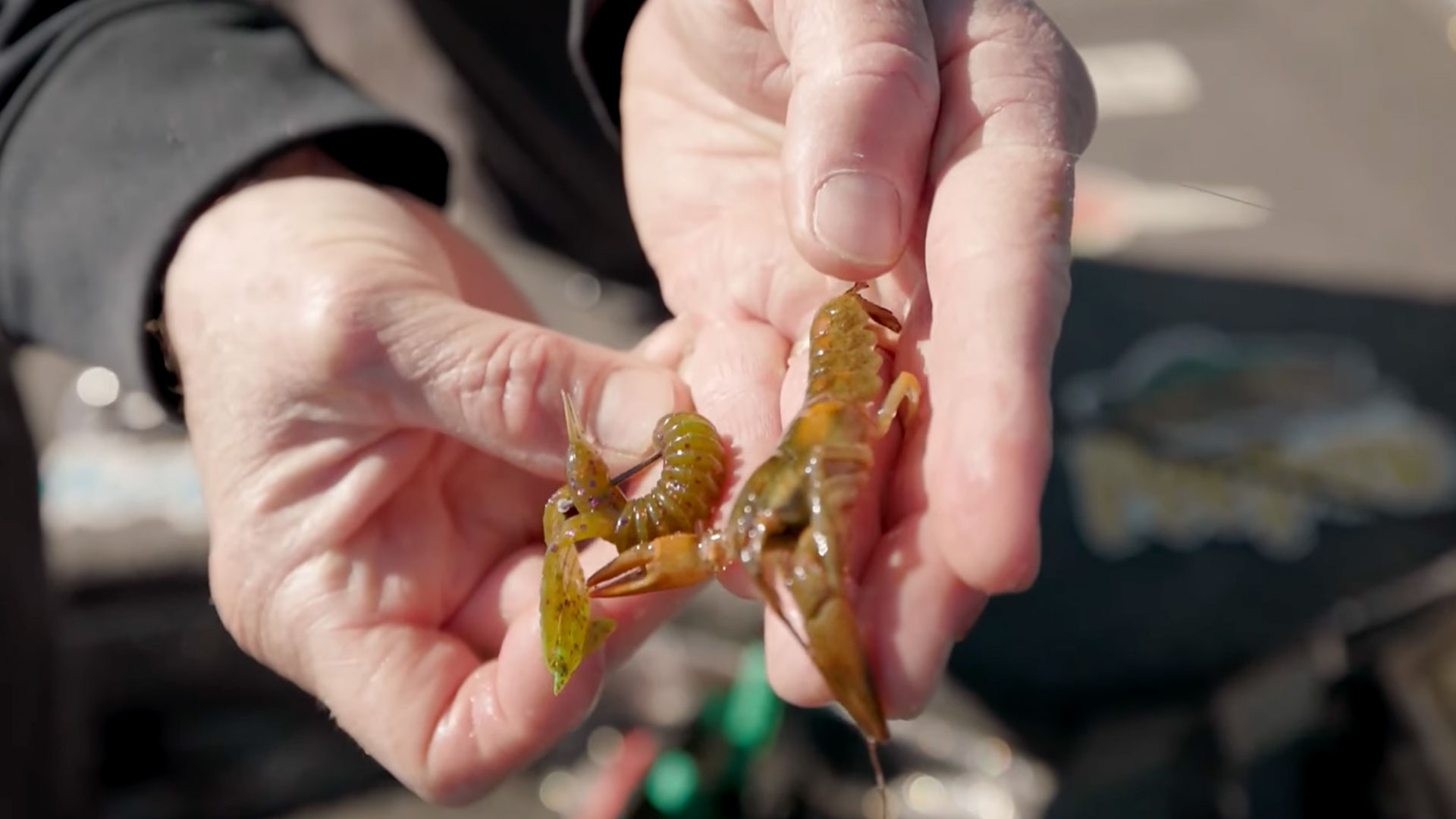
The best thing you can do when you arrive at a new lake? Flip over some rocks or shallow debris along the bank and find an actual crawfish. Look at it. Match that color as closely as possible and you're already ahead of most anglers on the water.
Matching the Movement, Not Just the Color
Crawfish swim backwards when fleeing — and they move fast. That's why crankbaits work so well as crawfish imitators. A crankbait in brown, orange, or green banging off rocks mimics a crawfish bolting away. Bass react to that deflection the same way a cat reacts to something darting past — pure instinct, mouth first.
For slower, more precise presentations around grass, wood, or rock, a Texas-rigged crawl bait or flipping jig dropped into cover and popped out mimics a crawfish shooting up out of its hiding spot. The color still matters, but so does matching the behavior — fleeing, hiding, or sitting on bottom.
Know your lake's water clarity, check the bank for real crawfish when you can, and adjust your color based on what the environment is actually producing. That's how the pros do it — and now you know why.