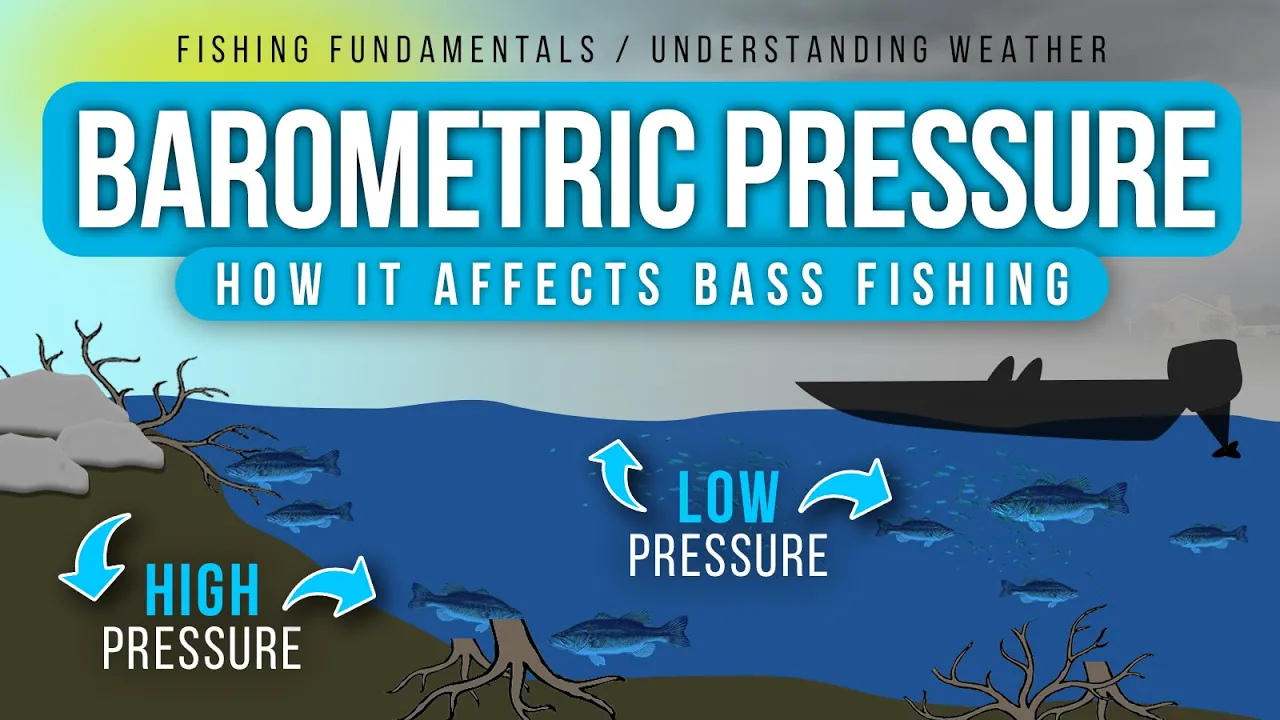
High pressure puts the brakes on bass activity. Low pressure turns it on. Brandon breaks down exactly what barometric pressure does to fish, why it matters more in cold water than warm, and how to adjust your presentation for any pressure condition.
You've heard anglers talk about high and low pressure days. But understanding what those pressure changes actually do to bass — and how to adjust — is what separates a frustrating day on the water from a productive one. Brandon breaks it all down.
What Is Normal Barometric Pressure?
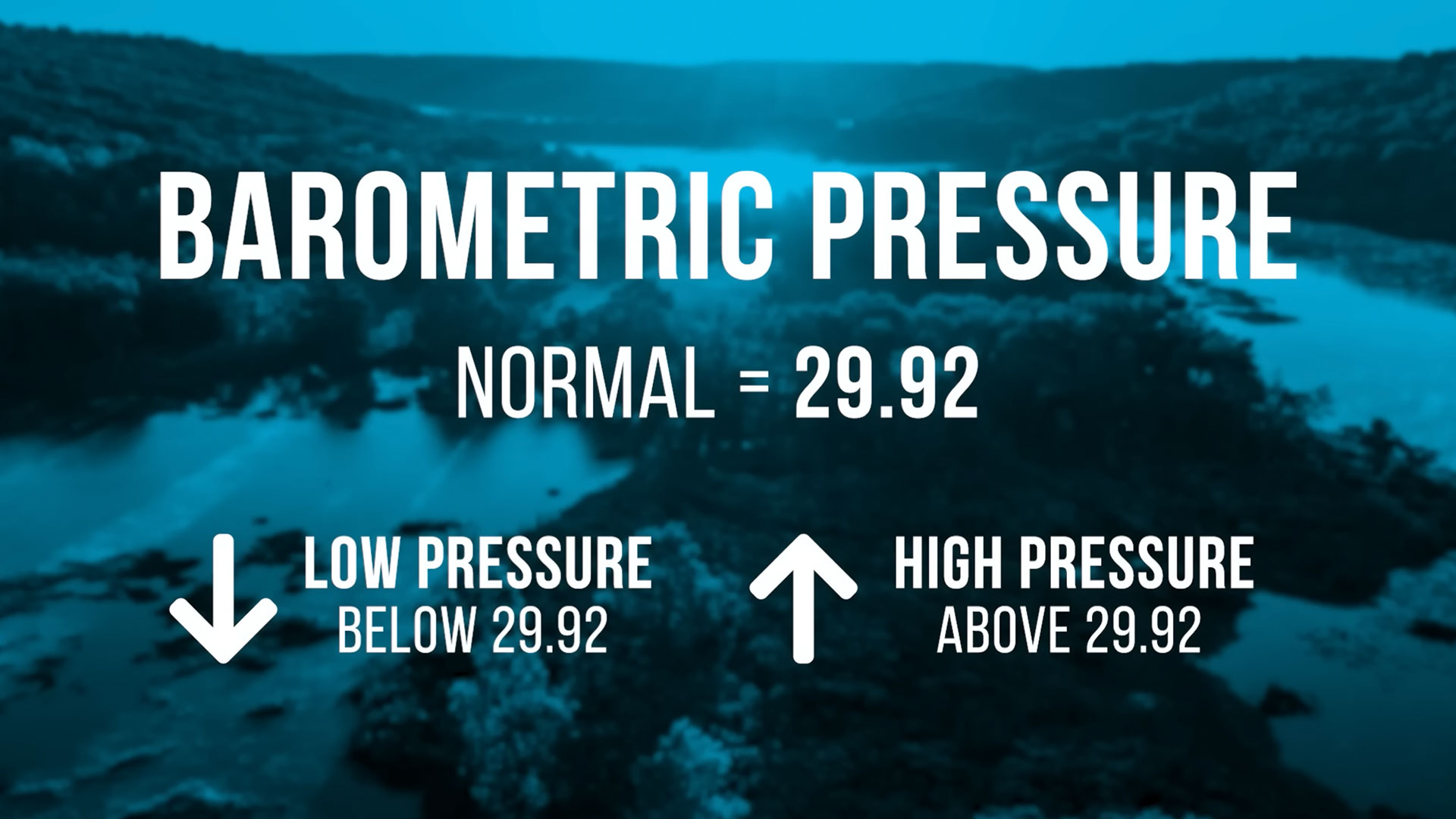
Standard barometric pressure is 29.92 inches of mercury. Everything below that is considered low pressure. Everything above it is high pressure. But the number itself matters less than the direction it's moving — whether pressure is rising, falling, or holding steady has just as much impact on fish behavior as the absolute reading.
High Pressure: Why It Makes Fishing Harder
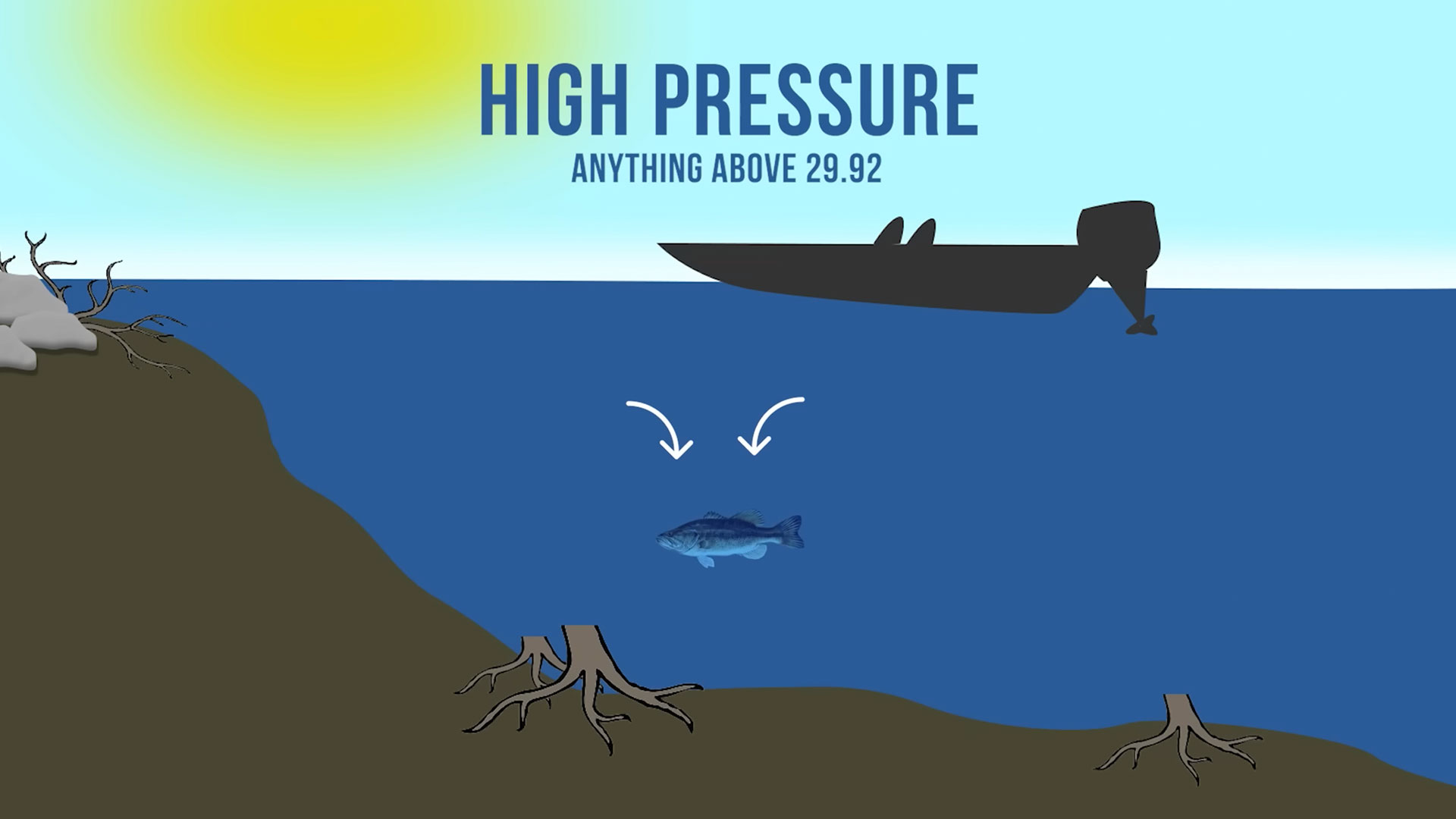
Think of high pressure as a weight pressing down on the fish. That weight compresses their air bladder, which affects their comfort and their mood. When pressure is high or rising — especially pushing up into the 30s — bass tend to drop in the water column, hug the bottom, and become much less willing to chase.
This effect is most pronounced in cold water. During winter and pre-spawn, stacking cold temperatures on top of a high pressure system really shuts fish down. In warm summer water, bass metabolism is running fast enough that pressure matters much less — they're going to eat regardless. But in cold water, high pressure can make them nearly lockjaw.
High pressure days are also typically calm and clear — beautiful weather for being on the boat, but tough conditions for fishing. No wind means no chop on the surface, no bait movement, and less cover for your presentations. The fish can see everything clearly, and they're already uncomfortable from the pressure. It's not a recipe for aggressive feeding.
On those days, slow down. Go to your bottom baits — jigs, drop shots, slow-rolled presentations that put the bait right in front of fish that aren't going to move far to eat. With forward-facing sonar you can pick at those fish when you can actually see them sitting down deep, but even then you're coaxing bites rather than triggering reactionary ones.
One old-timer tip worth knowing: floating sticks or debris in the water that sit vertically — straight up and down — tend to indicate high pressure. It's not a foolproof read, but it's one more piece of information.
Low Pressure: When Fish Get Active
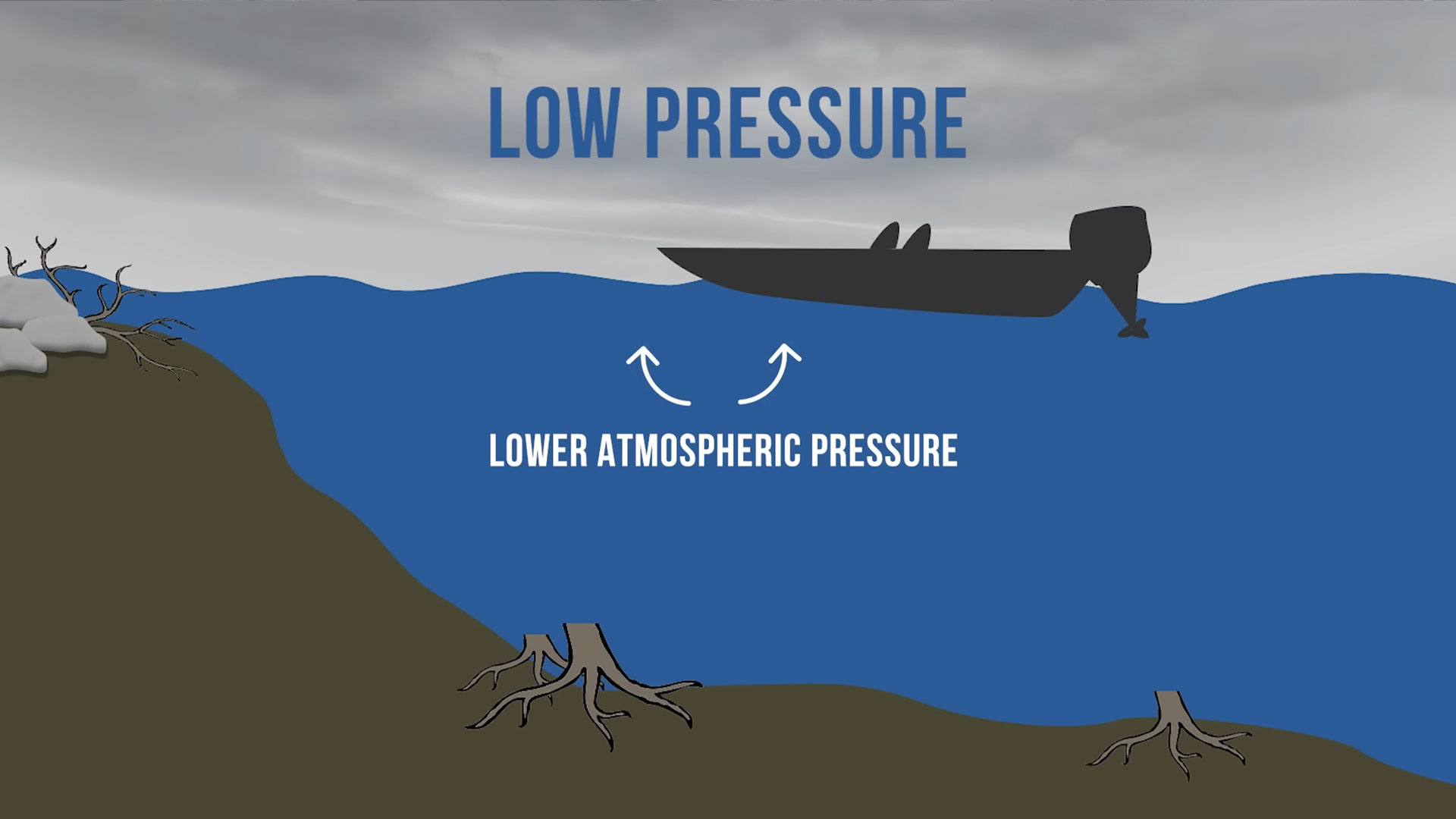
Low pressure is generally the better fishing scenario, especially when pressure is falling. As the weight comes off the fish, their air bladders expand, they rise in the water column, and they get more active and willing to feed. A dropping pressure almost always precedes a storm front — which usually also means wind, cloud cover, and chop on the water. All of those things independently help fishing, which is why the two tend to go hand in hand.
When pressure is falling, bass often move up and start chasing. They're more likely to commit to moving baits, to come up and eat topwater, to chase a spinnerbait across a flat. In the fall and spring especially, a falling pressure window can trigger some of the most aggressive feeding of the season.
You don't need to be at the floor of low pressure for it to help. Even if the reading is technically still above 29.92 but it's been dropping consistently, fish feel that change and respond to it. The direction of movement matters.
The Day After a Front: The Hardest Day to Fish
The toughest conditions typically come right after a front passes through. Pressure spikes, skies clear out to bluebird conditions, wind dies down — and fishing gets hard fast. That post-front high pressure day is when most anglers struggle the most.
The good news is it doesn't last. Fish can't go hours without feeding, let alone multiple days. As pressure stabilizes — even if it stays elevated — bass adapt and begin feeding again. A steady pressure that's held for a day or two, even at a high reading, is easier to fish than a rapidly rising one right after a front.
How to Use This Information
Check the barometric pressure before you head out, but more importantly, look at what it's been doing over the past few days. Is it falling going into your trip? Expect active fish — throw moving baits, work higher in the water column. Is it high and rising right after a front? Slow down, go deep, fish bottom presentations, and be patient.
In summer, don't overthink it — warm water overrides most pressure effects and the fish are going to eat. Where this really matters is spring, fall, and winter, when water temps are lower and fish are more sensitive to pressure swings. Learn to read the trend, not just the number, and you'll have a real edge on days when other anglers can't figure out why the fish aren't biting.